
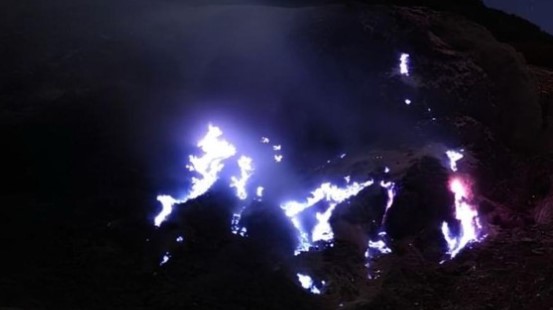
A rare natural phenomenon known as “blue fire,” which had recently appeared at Mount Papandayan, is no longer visible, according to local conservation officials.
Blue Fire No Longer Visible
The blue flame, previously observed in the Mount Papandayan area of Garut Regency, West Java, has reportedly vanished. Ery Mildrayana, Public Relations Officer for the West Java Natural Resources Conservation Center (BBKSDA), confirmed that the blue fire phenomenon has effectively “disappeared” from the mountain.
“As of September 27, 2026, the gas smell has relatively decreased, and the blue fire is no longer visually present,” Ery said in a statement sent via text message on Tuesday, October 6, 2026.
Monitoring Continues Despite the Disappearance
Despite the phenomenon no longer being visible, teams assigned to the site continue monitoring the area intensively.
“Periodic monitoring is still ongoing from the Volcanology team together with colleagues from the Garut Regional Natural Resources Conservation Section,” Ery explained.
Hiking Restrictions Remain in Place
Ery also noted that activities at Mount Papandayan, particularly hiking, remain restricted for the time being.
“Hiking is still restricted,” he said.
Where the Blue Fire Appeared
According to Ery, the blue fire phenomenon occurred near Pos 7, a point located close to the mountain’s main hiking trail. The appearance of blue fire warranted caution, since it carries the potential for volcanic gas exposure, which can pose serious safety risks to anyone in the vicinity.
“These restrictions are being implemented to ensure visitor safety, while also giving officers and related teams the space needed to monitor this phenomenon,” he concluded.
What Causes Blue Fire Phenomena
Blue fire, a rare volcanic phenomenon also famously observed at Indonesia’s Kawah Ijen, typically occurs when sulfuric gases emitted from volcanic vents ignite upon contact with air, producing a distinctive blue glow, especially visible at night.
While visually striking, these gas emissions can be hazardous to breathe, which is why access restrictions and careful monitoring are standard precautions whenever such phenomena are observed.
What This Means for Hikers and Visitors
For travelers who may have been hoping to witness Mount Papandayan’s blue fire phenomenon in person, the news that it has disappeared means this particular opportunity has passed, at least for now.
Given that hiking restrictions remain in effect regardless of the phenomenon’s current visibility, anyone planning a visit to Mount Papandayan should check with local authorities or BBKSDA for the latest access updates before attempting a trip.
The continued monitoring by volcanology and conservation teams also suggests officials are taking a cautious, safety-first approach, prioritizing visitor welfare over reopening the area prematurely, even as visible signs of the gas activity appear to be subsiding.