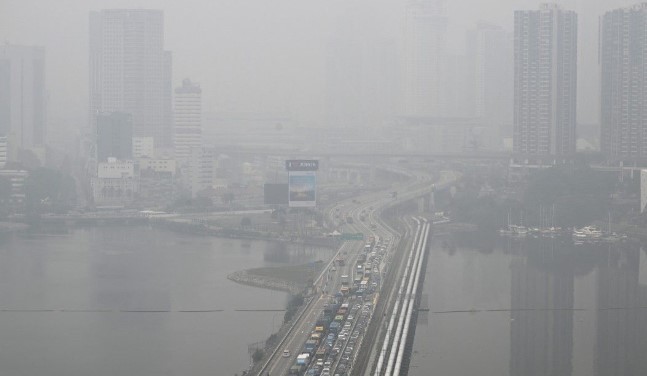
Haze from forest and land fires in Indonesia isn’t just disrupting activity within the country. Its effects are being felt in neighboring countries, including Singapore and Malaysia, with several outdoor tourism businesses reporting a drop in bookings.
In Singapore, some tour operators have recorded customer numbers falling by as much as 30%. Tourists are choosing to postpone or cancel activities that require being outdoors when air quality worsens.
Smoke from fires in southern Sumatra and Kalimantan is being carried by southeasterly winds toward Singapore. Singapore’s National Environment Agency (NEA) says these conditions have pushed air quality in several areas into the unhealthy category.
Activities conducted outdoors for extended periods or requiring significant exertion are among the most affected. Several operators have since changed their routes and are offering indoor activity options so tourists can still enjoy Singapore.
Tour Operators Adapt Their Routes
One example is On A Roll Tour. According to VN Express (Friday, October 16, 2026), the company’s founder, Yeo Yen Ping, said bookings for kick scooter tours and walking tours have dropped roughly 10-20% compared to the same period last year.
However, Yeo also noted that the decline isn’t entirely attributable to the haze. According to Channel News Asia, he said rising hotel and airfare prices may also be contributing to lower tourist numbers.
The kick scooter tours offered by On A Roll Tour typically cover around 8-10 kilometers. When air quality worsens, customers are guided toward walking tours or activities that take place largely indoors.
Tour routes are adjusted to include air-conditioned venues, such as the National Gallery, Victoria Theatre and Concert Hall, museums, and the Singapore City Gallery. This way, tourists can stay active without spending too much time exposed to outdoor air.
Boat Charters Hit Hardest
A bigger impact has been felt by Wonderlust Adventures, a company providing yacht charters on open waters.
Wonderlust Adventures Director Quek Wee Teck said his business has dropped around 30% since September 2026. Tourists make up more than half of the company’s customers, with markets spanning China, India, Europe, Australia, and the United States, among others.
Unlike tours that can be redirected to museums or indoor venues, Wonderlust Adventures’ options are far more limited. Each boat charter has a minimum duration of four hours, with most of that time spent in the open air.
The drop in customers has also been felt from the Chinese market. Normally, the company receives a large number of Chinese tourists during China’s National Day holiday, which begins on October 1. This year, however, the number of tourists from that country is said to have fallen sharply.
Meanwhile, Singapore River Cruise hasn’t felt any significant business change from the haze so far. One contributing factor is the relatively short trip duration of around 40 minutes.
Even so, air conditions remain a consideration for tourists planning outdoor activities.
How Bad Has the Air Quality Gotten?
Haze from Indonesia’s forest and land fires began affecting Singapore’s air quality in early September 2026. On September 4, the 24-hour Pollutant Standards Index (PSI) in central Singapore reached 101, placing it in the unhealthy category.
The situation worsened again in October. According to a Reuters report on October 14, 2026, the one-hour PM2.5 concentration in western Singapore reached 284 micrograms per cubic meter.
That figure became the highest reading in Singapore throughout 2026, categorized as “very high” by NEA.
Malaysia Feels the Effects Too
The haze is also being felt in Malaysia. Several tour operators have adjusted their activities, particularly outdoor activities significantly impacted by poor air quality.
Mint Leong, President of the Malaysian Inbound Tourism Association, said tour operators have shortened the duration of outdoor activities and shifted them toward indoor options. Shopping malls and museums have become alternative choices to keep tourists active when air conditions worsen.
A Government-Level Concern
Transboundary haze has also drawn direct attention from the Malaysian government. Malaysian Prime Minister Anwar Ibrahim said on October 8 that the situation had reached a worrying level. He said he had contacted President Prabowo Subianto and asked for immediate action to be taken.
“The haze problem has reached a worrying level. I personally contacted President Prabowo, and he has agreed to take the necessary steps,” Anwar said, as quoted by Malay Mail.
Anwar said the Malaysian government is concerned the haze will impact public health. Malaysia has also increased the frequency of weather modification operations to help reduce the haze’s impact, though results have so far been limited.
A day later, the Malaysian government said it was still awaiting Indonesia’s response to an offer of assistance in handling forest and land fires in Sumatra and Kalimantan. Malaysia offered firefighting aircraft, three helicopters, and 52 personnel to help with firefighting operations.