
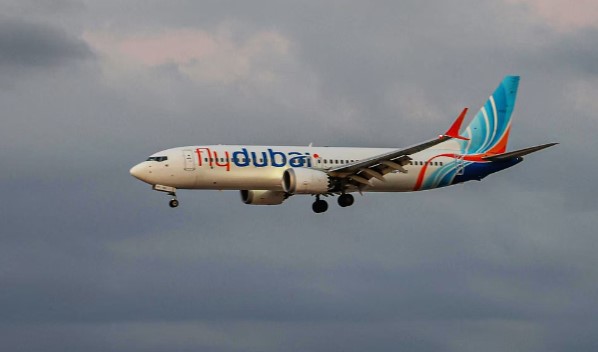
The Flydubai hijacking incident that shook the aviation world at the end of September might have faded from the daily news cycle, but for the passengers who lived through it, the nightmare is far from over.
Many survivors of the terrifying ordeal are now struggling with serious psychological trauma, and according to them, the Israeli government has largely left them to figure things out on their own.
According to a report from Times of Israel published Friday, October 30, 2026, several passengers who were aboard the Dubai to Tel Aviv flight say they’re still fighting to cope with the psychological aftermath of what happened.
Despite surviving one of the most harrowing aviation incidents in recent memory, they claim the Israeli government hasn’t provided any coordinated counseling or support services in the weeks since the event.
Passengers Are Paying for Their Own Therapy
With no official help materializing, some survivors have resorted to seeking private psychological counseling out of their own pockets. These complaints have surfaced as passengers attempt to return to their normal daily routines, only to discover that the emotional scars from the incident run much deeper than anyone initially expected.
Daniel Schlichter, a 59 year old passenger who was flying home with his wife after a vacation in Japan when the hijacking occurred, says many of his fellow passengers still haven’t been able to resume normal life. Some are struggling to go back to work or school, while others are dealing with severe sleep disturbances and an inability to process what they went through.
Schlichter himself admits he’s having trouble even remembering details of the Japan trip he and his wife had just enjoyed before everything went horribly wrong. That’s a pretty telling sign of how deeply traumatic the experience was, when a once in a lifetime vacation gets completely overshadowed by what happened on the flight home.
Trauma Doesn’t Just Disappear When You Land Safely
Another passenger, Almog Italie, who was on the plane with his wife and two teenage children, believes the psychological impact of this incident demands serious attention from authorities. According to him, trauma doesn’t simply vanish just because passengers managed to make it home alive.
Everyone responds to traumatic events differently, and professional support is essential for those who are having a particularly hard time recovering.
It’s a fair point, and one that mental health professionals would almost certainly agree with. Surviving a life threatening situation at 30,000 feet isn’t something most people can just shake off after a few days of rest.
The Initial Response Looked Promising, Then It Fell Apart
To be fair, the immediate aftermath of the hijacking did involve some visible government attention. When the hijacking was successfully thwarted, Israeli Prime Minister Benjamin Netanyahu personally greeted several survivors at Ben Gurion Airport, including Yaniv Hayun, one of the passengers who helped subdue the rogue copilot.
Emergency medical teams from Magen David Adom were also on standby to assist passengers who needed immediate medical attention.
But according to Schlichter, that initial show of support didn’t translate into any sustained, coordinated follow up care in the weeks that followed. He says that after just a few days, passengers felt completely on their own, left to navigate the emotional fallout without any structured assistance from the government.
Government Agencies Are Passing the Buck
When survivors tried to access official support channels, they ran into a frustrating bureaucratic maze. A spokesperson for Israel’s Ministry of Welfare and Social Security stated that handling these passengers wasn’t actually their responsibility, pointing instead to a different ministry entirely.
Meanwhile, Israel’s National Insurance Institute said it couldn’t provide any special assistance to the survivors until the Ministry of Defense officially classifies the incident as a “hostile action” that meets the legal criteria for compensation and support.
The Defense Ministry, for its part, is still waiting for information from investigators before making any determination. So essentially, each agency is pointing at another agency, and the survivors are stuck in the middle waiting for someone to take ownership of their situation.
A Class Action Lawsuit Is Taking Shape
Amid all this bureaucratic limbo, around 100 passengers have reportedly begun exploring a class action lawsuit against Flydubai as well as Israeli and United Arab Emirates government authorities. They’re questioning the security failures that allowed this incident to happen in the first place and are considering seeking damages for the trauma they endured.
It’s worth noting that this legal effort is still in the preparation stage and hasn’t resulted in any court ruling assigning responsibility to any specific party yet.
A Quick Recap of What Actually Happened
For those who might have missed the original story, the incident occurred on September 30, 2026, aboard Flydubai flight FZ1073 traveling from Dubai to Tel Aviv. According to Times of Israel reports, the copilot allegedly attacked the captain and attempted to seize control of the aircraft.
The plane nosedived sharply by thousands of feet, triggering absolute panic inside the cabin. Several passengers stepped in to stop the attacker, and fortunately, two off duty pilots who happened to be on board also helped regain control of the situation.
The aircraft ultimately made an emergency landing in Saudi Arabia, where passengers went through processing before being flown back to Tel Aviv on a replacement aircraft.
What This Means Going Forward
The fact that survivors of such a dramatic and life threatening event are being left to fend for themselves psychologically is honestly pretty shocking. Aviation incidents of this severity typically trigger comprehensive support programs in most developed countries, including immediate counseling, long term mental health services, and clear communication about available resources.
The apparent absence of any such coordinated response from Israeli authorities raises serious questions about how the country handles the aftermath of traumatic events affecting its citizens.
For the roughly 100 passengers now considering legal action, the road ahead will likely be long and complicated. But their willingness to pursue accountability suggests that the frustration and sense of abandonment they’re feeling is very real and not going away anytime soon.
Until the government agencies involved stop passing responsibility back and forth and actually step up with concrete support, these survivors will continue bearing the weight of this trauma largely on their own, which is a pretty unfortunate outcome for people who already endured more than most of us can imagine.