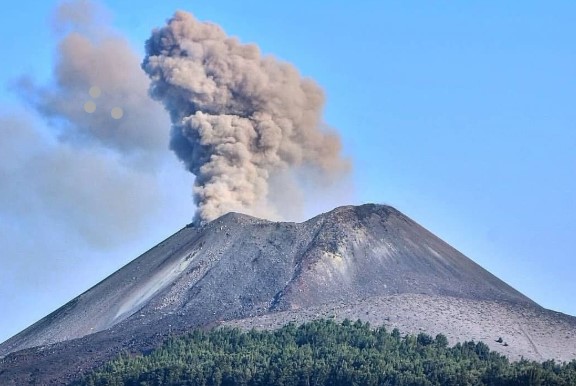
The alert status for Mount Anak Krakatau has been downgraded from Level III (Alert) to Level II (Watch), sparking optimism among tourism business owners in the Anyer region who are hoping the change will help revive local tourism activity after a period of uncertainty.
Tourism Industry Welcomes the Downgrade
“Our hope, especially among business operators, is that conditions continue to improve and tourism activity can pick back up. It’s not just tourism operators, local communities also hope things return to normal, since many people here depend on this sector for their livelihood,” said Herlinna, Treasurer of the Indonesian Hotel and Restaurant Association (PHRI) for Serang Regency, on Tuesday, September 22, 2026.
Herlinna emphasized that while the downgrade is encouraging news, both residents and tourists should continue monitoring official updates and following guidance from relevant authorities before resuming full activity in the area.
“With the status lowered from Level III to Level II, this is certainly good news. We hope the public and tourists can remain calm and feel confident engaging in activities within the tourist areas, while still following official information and directives from BPBD (the Regional Disaster Management Agency) and related institutions,” she explained.
Tourism Continued Even at Higher Alert Levels
According to Herlinna, tourism activity in the Anyer and Cinangka areas continued relatively uninterrupted even during the Level III (Alert) period, as long as visitors and businesses stayed informed and followed government directives.
She pointed out that even at Level III status, the unsafe exclusion zone around Anak Krakatau was limited to just 3 km from the volcano itself. In contrast, the popular beach destinations of Anyer and Cinangka sit much farther away, between 40 to 60 km from the volcano, placing them well outside any immediate danger zone.
“Tourism activities in Anyer and Cinangka continued throughout the Level III period, with everyone closely following official updates. Now that the status has been lowered, we’re hopeful that tourist confidence will improve and visitor numbers will start climbing again,” she added.
Don’t Compare This to the 2018 Tsunami, Official Warns
Herlinna also urged the public not to directly associate the current volcanic activity with the devastating 2018 Sunda Strait tsunami, stressing that the two situations involve fundamentally different circumstances.
The 2018 disaster was triggered by a massive flank collapse of Anak Krakatau, during which the volcano’s height dramatically dropped from 338 meters above sea level to just 110 meters, following a large-scale landslide of the volcano’s body into the sea. This collapse, combined with underwater displacement, was what ultimately generated the deadly tsunami that struck coastal areas along the Sunda Strait.
“The current situation needs to be assessed based on the latest data and evaluation of Anak Krakatau’s activity. What happened in 2018 was a distinct event, where volcanic activity combined with a partial collapse of the mountain’s structure triggered a tsunami in the Sunda Strait,” Herlinna explained.
She cautioned against drawing conclusions simply by comparing the present situation to past events, noting that volcanic behavior can vary significantly between different periods of activity.
“That’s why the public shouldn’t jump to conclusions based only on comparisons with past incidents. Instead, everyone should rely on official information and recommendations issued by the Geological Agency and BPBD,” she said.
What This Means for Visitors Planning a Trip
For travelers considering a visit to Anyer, Cinangka, or Carita, the downgraded alert status offers a reassuring signal that conditions around Anak Krakatau have stabilized. However, tourism officials and local authorities continue to stress the importance of staying informed through official channels rather than relying on assumptions or past events to gauge current safety.
The tourism sector in this part of Banten province has faced repeated disruptions in recent years due to fluctuating volcanic activity, making the latest downgrade a welcome development for an industry that many local families depend on for income. As confidence gradually returns, business owners like Herlinna remain hopeful that visitor numbers will rebound in the months ahead, provided the situation continues to remain stable and well-monitored by relevant authorities.
Travelers planning a visit are encouraged to check real-time updates from Indonesia’s Geological Agency (Badan Geologi) and local disaster management offices (BPBD) before finalizing travel plans, ensuring they have the most accurate and current information available.