If you’ve got travel plans anywhere near Kalimantan right now, you’ll definitely want to read this. Forest fires burning across several regions in Indonesia have thrown a serious wrench into the country’s aviation schedules, with thick haze reducing visibility to the point where thousands of flights have had to be delayed, canceled, or rerouted entirely.
Safety First, No Exceptions
Lukman F Laisa, Director General of Air Transportation, made it pretty clear that passenger safety remains the non negotiable priority whenever these haze related disruptions occur.
“We will not compromise on safety. If visibility falls below the minimum operational threshold, flights may experience delays, cancellations, postponements, or diversions. These measures are part of our efforts to protect the safety of passengers and crew,” Lukman stated on Monday (October 12, 2026).
That’s a pretty firm stance, and honestly, given how dangerous reduced visibility can be for aircraft operations, it’s hard to argue with the logic here.
The Numbers Are Genuinely Staggering
Based on coordinated data from the Ministry of Transportation, Airport Authority offices, airport operators, flight navigation service providers, and various airlines, the scale of disruption becomes clear. A total of 1,673 domestic flights were affected by the forest fires during the period spanning August 11 to October 9, 2026.
Breaking that number down further, 745 flights experienced delays, 907 flights were either canceled or postponed, 15 flights had to be diverted to alternative airports, and 6 flights were forced to return to their airport of origin, commonly known as RTB (return to base).
Which Airlines Took the Biggest Hit
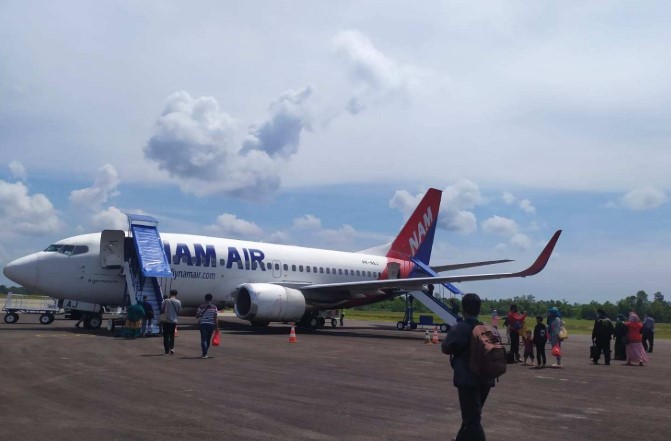
This disruption spread across 10 different airlines, though some clearly bore the brunt more than others. Citilink Indonesia topped the list with the highest number of affected flights at 478. NAM Air followed with 300 affected flights, Wings Air came in at 227, and Super Air Jet recorded 161 disrupted flights.
The remaining affected airlines included Surya Mataram with 134 flights, Batik Air with 112, Garuda Indonesia at 97, TransNusa with 94, Lion Air at 41, and Sriwijaya Air rounding things out with 29 affected flights.
Looking specifically at cancellations, Wings Air recorded the highest count with 226 canceled flights, followed by Super Air Jet at 158 and Citilink at 115. When it comes to delays specifically, Citilink again led the pack with 357 delayed flights, trailed by NAM Air with 212 delays.
Kalimantan’s Airports Bearing the Brunt
Several airports across Kalimantan found themselves right in the middle of this haze affected zone. These include Supadio Airport in Pontianak, Tjilik Riwut in Palangka Raya, Syamsudin Noor in Banjarmasin, H Asan in Sampit, Iskandar in Pangkalan Bun, and Rahadi Oesman in Ketapang.
This situation obviously creates real headaches for anyone trying to travel to or from these regions, whether you’re a local resident, business traveler, or tourist with plans to explore Kalimantan. Anyone with flights connecting through these affected airports really needs to stay prepared for potential schedule changes until visibility conditions improve to meet safe aviation standards.
It’s Not Just Forest Fires Causing Problems
Interestingly, forest fire haze wasn’t the only culprit behind flight disruptions during this period. Other factors like strong winds and volcanic ash also played a role in grounding flights across the country. Specifically, 14 flights were canceled due to volcanic ash dispersal from Mount Lewotolok and Mount Dukono.
It’s a reminder that Indonesia’s geography, sitting right along the Pacific Ring of Fire while also dealing with seasonal forest fire issues, creates a pretty unique set of aviation challenges that other countries simply don’t have to contend with on this scale.
What This Means for Affected Passengers
Here’s the part that matters most if you’re someone whose travel plans got caught up in all this chaos. The Ministry of Transportation has been clear that airlines are still obligated to fulfill passenger rights regardless of these disruptions, in accordance with existing regulations.
These passenger rights can include compensation, rescheduling options, or full ticket refunds, depending on the specific circumstances and applicable terms. It’s not like airlines get a free pass just because the disruption stemmed from environmental factors beyond their control.
Lukman emphasized that oversight won’t just be theoretical either. “We’ve assigned our Airport Authority offices to monitor the fulfillment of passenger rights on the ground. We won’t hesitate to impose sanctions on airlines that fail to meet their obligations according to regulations,” he stated firmly.
The Bigger Picture Here
This situation really highlights an ongoing challenge Indonesia faces almost annually during dry seasons, when forest fires across various regions create haze that doesn’t just affect air quality and public health, but ripples outward to disrupt entire transportation networks and economic activity.
For travelers planning trips to Kalimantan or other haze affected regions in the coming weeks, it’s worth building some flexibility into your plans and staying in close contact with your airline regarding potential schedule changes.
Given how unpredictable visibility conditions can be during active fire periods, having backup plans or at least realistic expectations about possible delays could save you significant stress down the line.
Meanwhile, this whole episode also underscores the broader environmental challenges Indonesia continues grappling with. Forest fires don’t just create temporary travel inconveniences, they represent a recurring seasonal crisis that affects public health, regional economies, and now, quite clearly, the reliability of air travel across significant portions of the archipelago.