
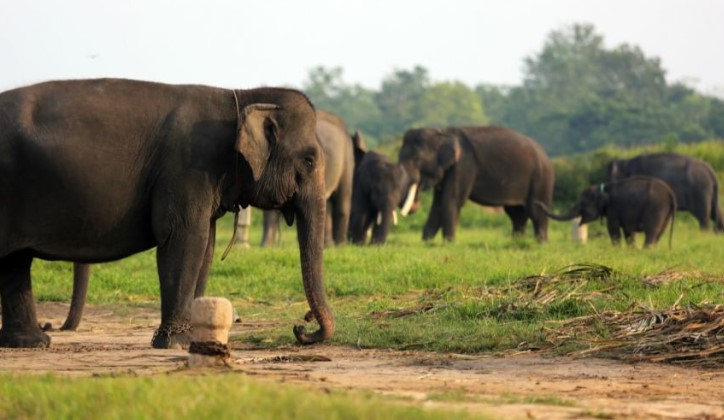
A wildfire tore through Way Kambas National Park (TNWK), burning an estimated 673 hectares of land. While wild elephants in the park remained unharmed, firefighting crews faced serious challenges due to difficult terrain and limited access to water sources.
The fire broke out on Friday, August 21, 2026, with the main hotspot concentrated around Kuala Penet Resort, in the park’s Region III Kuala Penet management zone.
Crews managed to fully extinguish the vegetation fire by around 7:00 PM local time on Saturday, though the process took considerably longer than usual due to a range of tough conditions on the ground.
Why Firefighters Struggled to Contain It
Several factors made the fire especially difficult to control: highly flammable peat soil, roads too rugged for firefighting vehicles to access, and a shortage of nearby water sources near the fire zone.
TNWK Center Head MHD Zaidi confirmed that the affected area was not within wild elephant territory.
“There have been no reports of elephants being affected by the fire. The wild elephant population is currently being monitored in the northern part of TNWK,” Zaidi said.
Zaidi explained that terrain conditions posed a major challenge throughout the response. The burned area sits on peatland, while the nearest water sources were located quite far from the fire’s location.
“TNWK, together with all involved parties, continues to make every effort to extinguish the fire. Difficult field conditions, distant water sources, and the peatland characteristics of the terrain have all presented significant challenges for teams on the ground,” Zaidi said, as quoted from the Ministry of Forestry’s official website.
The Job Isn’t Over Yet
Even though the fire has been extinguished, the response effort isn’t fully complete. TNWK teams are continuing cooling and monitoring operations to ensure no new hotspots re-emerge, particularly since part of the burned area consists of peatland, a type of terrain known for holding smoldering embers that can reignite unexpectedly.
The lengthy firefighting process was largely driven by the terrain itself. With the fire located in a peatland area, vehicle access to the hotspot was extremely limited, and water sources sat a significant distance away. Some personnel were even forced to walk on foot to reach the fire’s location directly.
A Large-Scale Response Effort
Around 250 personnel were deployed to handle the fire, drawn from multiple groups including TNWK staff, the Indonesian Military (TNI) and Police (Polri), local government representatives, partner organizations, and local community members.
Why This Matters for Way Kambas’ Ecosystem
Way Kambas National Park is home to some of Sumatra’s most significant wildlife conservation efforts, including its well-known elephant sanctuary. While this incident didn’t directly threaten the park’s elephant population, it’s a reminder of how vulnerable peatland ecosystems are to fire, and how much coordinated effort it takes to protect conservation areas like TNWK when conditions on the ground turn difficult.