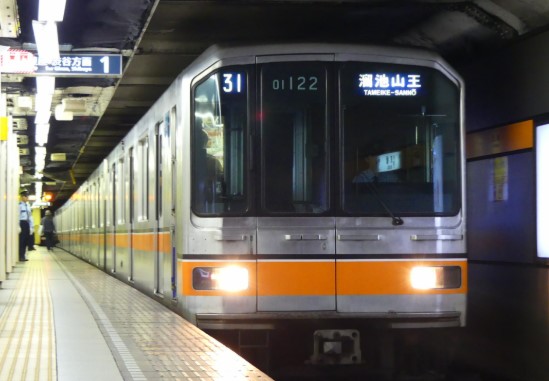
If you’ve ever experienced the special kind of chaos that is rush hour on Tokyo’s subway system, you know exactly why this next piece of tech innovation is such a big deal. Tokyo Metro is currently testing an AI powered system designed to help passengers find less crowded train cars, and the way it works is honestly pretty clever.
So How Does This Actually Work?
Instead of making you squint at some information board or guess which car might have more breathing room, this system uses floor projections right there on the platform to guide you. The trial is being conducted by three companies, including Tokyo Metro itself and Sharp, and it relies on an AI system that analyzes camera footage captured on the platform to estimate crowd levels for each upcoming train car.
According to News on Japan’s report from Friday (October 9, 2026), once the AI finishes its analysis, the results get displayed through projections directly onto the platform floor. If a particular section is heading toward a car that’s expected to be packed, the word “Crowded” lights up in that direction. On the flip side, a green indicator points toward train cars that are predicted to have more space available.
Why This Beats Staring at a Screen
Here’s what makes this approach genuinely smart. Passengers can immediately see which car positions are emptier without needing to stop and squint at an information display somewhere on the wall. They can simply follow the visual cues projected onto the floor while they’re already walking along the platform, making the whole process feel way more intuitive and natural.
Hideyuki Yoshino from Tokyo Metro explained the thinking behind this design choice. The goal was creating a system that naturally guides passengers toward less crowded areas without requiring extra effort or attention.
“We believe that by using something that naturally catches people’s attention as they walk, we can encourage them to move toward less crowded areas,” Yoshino explained.
That’s actually a pretty solid psychological insight. Rather than forcing people to actively seek out information, the system meets them where they already are, literally on the ground they’re walking on, making the behavioral nudge feel almost effortless.
What Happens During This Trial Period
This testing phase is set to run for several months. Throughout this period, Tokyo Metro and its partner companies will be closely monitoring whether these floor projections actually succeed in spreading passengers more evenly across the platform.
Beyond just watching the general distribution patterns, they’ll also be evaluating whether this technology can effectively reduce crowding, particularly in those spots that typically become gathering points right before a train arrives. You know the areas, the ones where everyone instinctively clusters near where they think the doors will open, creating unnecessary bottlenecks.
The entire system combines three key elements working together: cameras capturing real time platform conditions, AI analyzing that footage to predict crowd distribution, and floor projections translating that data into actionable guidance for passengers in the moment.
Could This Be the Future of Subway Crowd Management?
This technology represents a potentially new approach to tackling the persistent congestion problem within Tokyo’s massive underground rail network. Anyone who’s dealt with Tokyo’s subway system during peak hours knows just how real this challenge is, with some lines seeing passenger volumes that push facilities to their absolute limits daily.
If this trial proves effective, Tokyo Metro has indicated they’ll consider rolling out similar technology to additional stations throughout the network. That’s a pretty significant potential expansion, considering how extensive Tokyo’s metro system already is.
The end goal here goes beyond simply informing passengers about which cars are crowded. The system is specifically designed to actively guide people toward emptier cars, creating a more proactive solution rather than just passive information sharing.
Why This Matters Beyond Just Convenience
There’s something genuinely practical about this innovation that goes beyond making commutes slightly more pleasant. Better distributed passenger loads across train cars can mean faster boarding and disembarking times, reduced physical discomfort for commuters, and potentially even improved safety during those hectic rush hour periods when platforms get dangerously packed.
For a city like Tokyo, where efficient public transportation isn’t just convenient but absolutely essential to how millions of people navigate daily life, even incremental improvements in crowd management can have ripple effects across the entire system’s efficiency.
It’ll be interesting to see how this trial plays out over the coming months. If Tokyo Metro’s hypothesis proves correct, and passengers really do respond intuitively to these floor projections, this could represent a surprisingly low tech solution (at least from the user’s perspective) to a persistently high tech problem.
Sometimes the best innovations aren’t about adding more complexity for the end user, but rather finding smarter ways to present information that people can act on instinctively, without even having to think about it.
Whether other major transit systems around the world will be watching this experiment closely remains to be seen, but given how many cities struggle with similar rush hour crowding issues, Tokyo Metro’s AI powered floor projection system might just become a blueprint worth studying.