
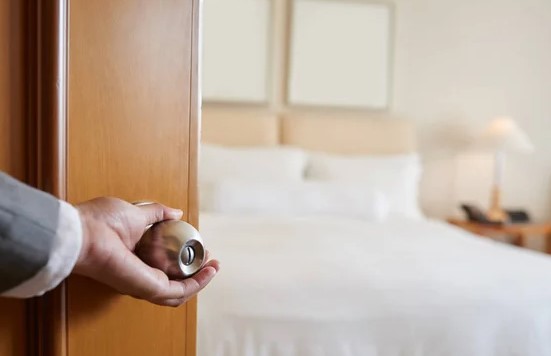
Most travelers collapse onto the bed the moment they walk into a hotel room. Flight attendants, on the other hand, have a very different habit, they spend about 90 seconds inspecting the room before actually settling in.
According to Travel + Leisure, reported Sunday, September 20, 2026, cabin crew refer to this quick inspection as a “hotel room autopsy.” The habit is fairly widespread among flight attendants who spend hundreds of nights in hotels every year.
The entire routine takes roughly 90 seconds. Crew members say this “ritual” exists purely to confirm a room is safe before they actually use it.
The check covers everything from making sure no one else is in the room to identifying the nearest evacuation route.
“This isn’t a nervous habit,” wrote CabinCrew24, an online platform serving as a resource for flight attendants and aviation professionals.
According to the platform, this habit developed from years of staying in hotels with wildly inconsistent safety standards and security protocols. In fact, several of these steps closely align with hotel safety recommendations published by the US State Department.
What Flight Attendants Actually Check When They Arrive
1. Scan the Room First
The first step is scanning the entire room to confirm no one else is inside. Crew members typically leave the door open while doing this initial check.
Beyond confirming the room is empty, they’re also checking that cleaning has actually been completed properly.
“I just want to get a feel for the room and make sure everything looks the way it should,” said Aura Martinez, a New York-based flight attendant with 19 years of experience.
According to her, this check doesn’t need to be excessive, it just needs to be quick and thorough.
2. Check Areas That Are Easy to Overlook
Next, they check spots that could potentially serve as hiding places, the bathroom, shower area, bathtub, closets, and behind curtains.
This simple check helps confirm nothing suspicious is present before settling into the room.
3. Locate the Evacuation Route
Cabin crew also always locate the nearest emergency exit or evacuation stairwell. They typically check the evacuation map posted on the back of the room door to understand the escape route in case of fire or another emergency.
“In an actual emergency, that’s not the time to be learning the building layout for the first time,” said Brian Rooney, travel consultant and founder of GetCruiseInfo.com.
Martinez recommends guests memorize which direction to turn when exiting their room, left or right, and get a rough sense of the distance to the nearest emergency stairwell.
4. Test the Locks
The next step is checking the entire locking system in the room. This means confirming the main door, deadbolt, security latch, and windows all lock properly and function as intended.
5. Check the Room Phone
Even though nearly everyone carries a mobile phone these days, cabin crew still recommend checking the room’s landline phone. It can serve as a critical backup for contacting the front desk or emergency services if your mobile phone has an issue.
Rooney also reminds guests not to open the door immediately if someone claims to be hotel staff. “Call the front desk first to verify their identity before opening the door,” he advised.
6. Add Extra Security to the Door
As a final step, cabin crew often use a portable door alarm or an additional door wedge. These simple tools can provide a warning if someone attempts to enter the room.
According to Rooney, these extra tools can offer added peace of mind, particularly for solo travelers. That said, they should never replace the hotel’s main locking system, they’re a supplement, not a substitute.
Martinez also recommends travelers carry a small flashlight when traveling. According to her, it’s often dismissed as unnecessary, but proves genuinely useful in emergency situations.
The Goal Is Preparedness, Not Fear
Despite the thoroughness of this routine, experts emphasize that the point of this quick check isn’t to make travelers afraid to travel.
“Take a minute or two to check the room, the locks, and the evacuation route. After that, go enjoy your trip,” Rooney said.
Martinez echoed the same sentiment. “The goal is to be prepared, not to feel afraid,” she said.
Building this 90-second habit into your hotel arrival routine costs almost nothing in time, but it can make a real difference if something actually goes wrong. Next time you check into a hotel, try running through these six steps before you unpack, it’s a small habit borrowed directly from people who’ve spent their careers thinking about safety in unfamiliar spaces.